Every job
Lead to sign-off in one thread
Every job from lead to sign-off in one thread: photos, materials, variations and the customer signature.
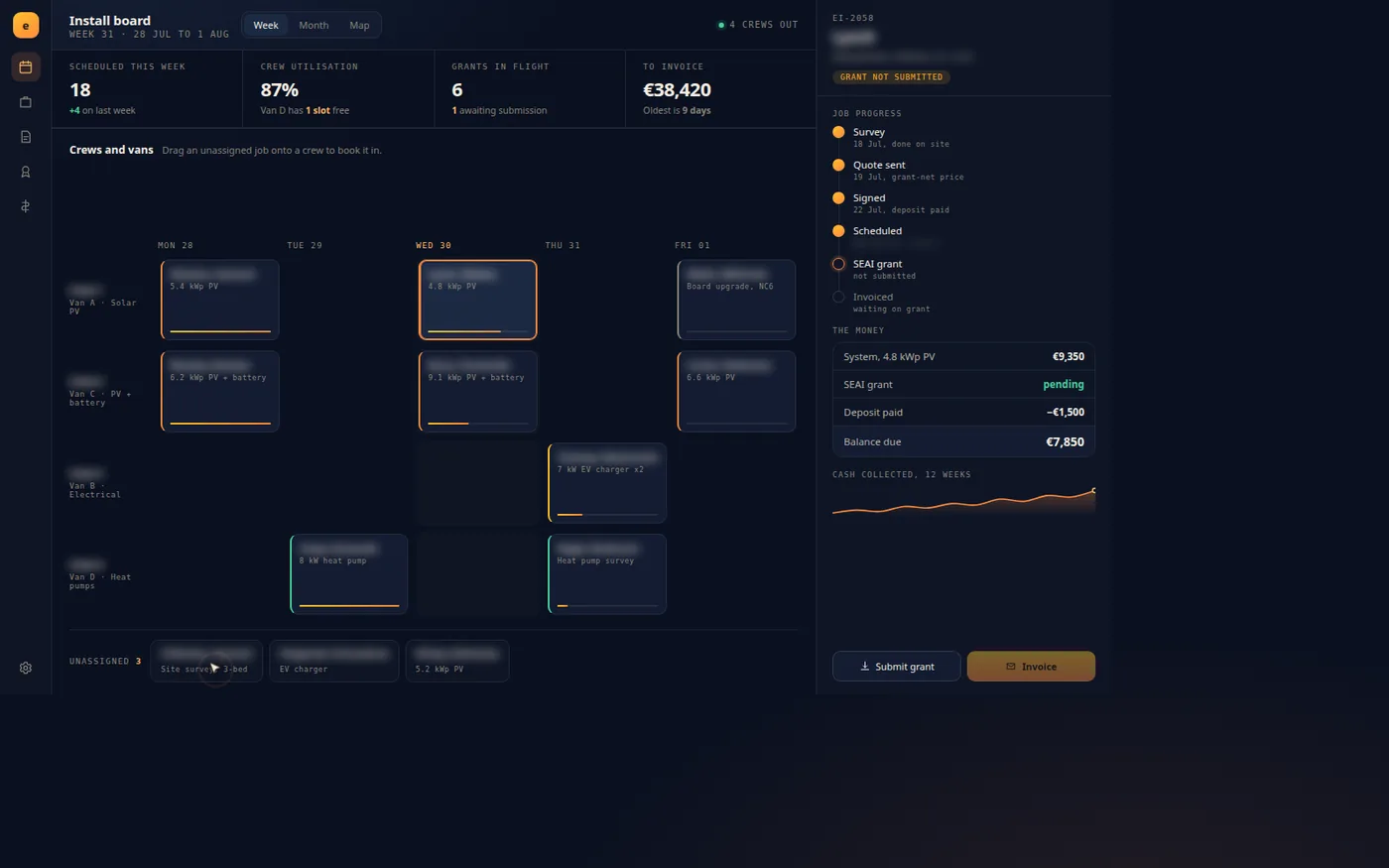
Large installers and electrical contractors running many crews end up scheduling on a whiteboard, chasing grant paperwork by hand, and keying wholesaler pricing twice. EOS, MTMN's own studio for the energy trade, puts the job, the grant and the invoice on one screen.
EOS is MTMN's own software studio for the energy trade. See the full platform at eosgroup.ie/scale.
Every job from lead to sign-off in one thread: photos, materials, variations and the customer signature.
The SEAI grant per job, tracked from application to drawdown next to the certs it depends on; the office and the vans on one calendar.
Quotes, deposits, stage payments and the invoice tied to the job, with grant portals, accounting sync and wholesaler pricing wired in so data is keyed once; consumption and generation per site in the console.
The EOS install board puts crews, vans, grants in flight and money to invoice on one screen. Quoted up front, hosted in Ireland, owned outright by the installer.
A 30-minute scoping call with the engineers who would build it. Five questions first: your company size, your role, the system you run today, your timeline and a rough budget.
We map how a job moves today, from lead to grant drawdown to invoice, then send back a fixed-price scope and a delivery timeline.
Work starts against the agreed scope. The founders you spoke to are the ones who build it, through to handover.
A 30-minute scoping call with the engineers who would build it. Five questions first: your company size, your role, the system you run today, your timeline and a rough budget.